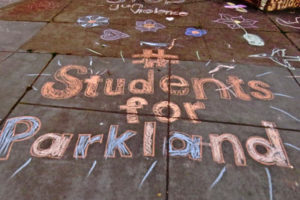
 When a tragedy happens there is a lot of talk. Many people are highlighted, and many issues are discussed. The Parkland School shooting is no exception to this. Since the shooting we have seen politicians, pundits, analysts, and now students getting time to speak about the issues surrounding guns.
Interestingly, the conversation is in many ways being led by these students. As a communication professional who has spent time as a secondary educator and researcher, I think there is something to be gleaned from this national discussion.
Surprisingly it has nothing to do with the Second Amendment. What we gain from these students is how communication does not tell us what to do but instead tells us what we should think about doing.
Cameron Kasky, a student from Parkland said “I’ve seen this happen countless times. And what happens is we get two weeks in the news, we get a bundle of thoughts and prayers, everybody sends flowers, and then it’s over, and then people forget.” That is the point. We forget and move on.
What Cameron highlights is that we should educate ourselves in order to agree or disagree with what we hear. The fact is effective communication on any issue hinges on knowledge. How can you competently discuss something or separate emotional appeals from logic without knowledge? The answer is you cannot.
I challenge you to take ten minutes, learn about something important to you beyond just the talk. Then our communication can stop being hyperbolic and rhetorical and turn to real substantive discussions. If young high school students can do it, I know we all can, and it would lead to better businesses, better leaders, better decisions, and a more informed populace. Wouldn’t that be wonderful!