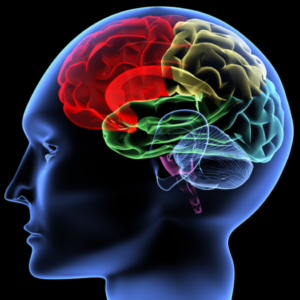
 Psychologist Jeff Thomas and I agree on the structure of the mind. The mind and the difference between the brain and the mind have been the focus of conjecture, controversy, and intellectual consternation for many centuries.
It is generally accepted that the brain is the repository of the things and stuff that we are exposed to during our lifetime. There may not yet be general acceptance of what exactly gets stored, where in the brain it is stored, or how it is retained, but we can accept that the brain takes in and holds the information from our life experiences. In addition, it’s possible to actually see the brain. We can measure it, weigh it, touch it, and know for sure that there is such a thing as the brain.
With the mind, things are different. The level of agreement on matters of the mind is not as universal. It is not something that we can weigh, measure, or hold in one hand. We cannot take a picture of it. It has never been seen by science or psychology.
The mind is different. As Jeff Thomas describes it, and at this moment in time, I am comfortable describing the mind in this shirtsleeve English manner: Picture the mind as a triangle. At the top of the triangle, the smallest part, we find the Conscious mind. It is the mind we use in our everyday lives. It is the mind that handles all the moment-to-moment decisions and actions we engage in throughout the waking day.
At the center of the triangle, we find the Subconscious mind. It is the mind where we store all the knowledge and information that we have learned over the years but do not necessarily need on a moment- to-moment basis. Yet, it is the mind that stores the commonly used learned behaviors that have become the muscle memory for daily activities.
At the bottom of the triangle, is the unconscious mind. It is the mind that retains all the information of life that is not needed regularly. It is the mind that is activated when we sleep. It is the mind that produces dreams and is not controlled by our waking activities. It is the mind that serves as a resource library where you may not go for years and years. However, it contains all the events and experiences that have occurred throughout life. It is this mind that is most active when we have those mixed-up dreams that combine so many inconsequential or meaningful events in a scenario that can present unrelated things in a narrative or story that is hard to comprehend.
Now we see that the brain and the mind are different. Both are vital to a balanced and controllable life experience.

The Structure of the Mind
It is generally accepted that the brain is the repository of the things and stuff that we are exposed to during our lifetime. There may not yet be general acceptance of what exactly gets stored, where in the brain it is stored, or how it is retained, but we can accept that the brain takes in and holds the information from our life experiences. In addition, it’s possible to actually see the brain. We can measure it, weigh it, touch it, and know for sure that there is such a thing as the brain.
With the mind, things are different. The level of agreement on matters of the mind is not as universal. It is not something that we can weigh, measure, or hold in one hand. We cannot take a picture of it. It has never been seen by science or psychology.
The mind is different. As Jeff Thomas describes it, and at this moment in time, I am comfortable describing the mind in this shirtsleeve English manner: Picture the mind as a triangle. At the top of the triangle, the smallest part, we find the Conscious mind. It is the mind we use in our everyday lives. It is the mind that handles all the moment-to-moment decisions and actions we engage in throughout the waking day.
At the center of the triangle, we find the Subconscious mind. It is the mind where we store all the knowledge and information that we have learned over the years but do not necessarily need on a moment- to-moment basis. Yet, it is the mind that stores the commonly used learned behaviors that have become the muscle memory for daily activities.
At the bottom of the triangle, is the unconscious mind. It is the mind that retains all the information of life that is not needed regularly. It is the mind that is activated when we sleep. It is the mind that produces dreams and is not controlled by our waking activities. It is the mind that serves as a resource library where you may not go for years and years. However, it contains all the events and experiences that have occurred throughout life. It is this mind that is most active when we have those mixed-up dreams that combine so many inconsequential or meaningful events in a scenario that can present unrelated things in a narrative or story that is hard to comprehend.
Now we see that the brain and the mind are different. Both are vital to a balanced and controllable life experience.
Author
Authors
MORE POSTS
What’s Wrong With Our Communication?
“We need to work on our communication skills.” “We have a communication problem.” “We need to fix our communication.” As an expert at the intersection of people/organizations and communication for over 20 years, I have heard these comments many times. But what does it mean to solve communication problems, or to make the communication in your company “better”? To share information about a major change successfully? To manage that one employee who can’t get along
The Terrain Informs the Technique
In executive coaching, you hear a lot of singular techniques — one framework, one mindset, one magic fix that’s supposed to solve everything. In reality, even the best techniques only work when they adapt to the terrain. The central lesson is simple: knowing not just what to do, but when and why to do it. It’s the difference between approach and technique, strategy and tactic. When I run in the mountains, I shorten my stride whether I’m going uphill or downhill, but for entirely different reasons.
How Important Is That Impression to Meeting Your Goal?
How often do you think about your goal when you prepare for a high-stakes interaction? Is selling your company or product the goal? Are you looking to connect with potential partners or purchasers? Are you looking to build your personal brand and move upward in your career? Do you want to become a thought leader? Are you hoping to raise visibility for your company? Do you want to educate people about what your product can
QUESTIONS? NEED HELP?