

More Speak with Confidence Tips
Tip #1: Enhance Your Professionalism Through Thoughtful Greetings and Endings Want to project more confidence in professional settings? Start by mastering your greetings. Instead of casual “Hey” or “What’s up,” opt for formal greetings like “Good morning” or “Good afternoon.” These greetings convey respect and instantly elevate the tone. For instance, swap “Hey, how’s it going?” with “Good morning, how are you today?” This subtle shift can make a big difference, highlighting your professionalism and

Why 90% Effort Gets You Zero Results in Communication
In communication, 90% effort often gets you 0% results. That may sound harsh, but it is true. Effort and outcomes are not always linear. To be effective in high-stakes moments, you have to be willing to be 100% present. That means reading the situation, choosing the right approach, and delivering with confidence. Think of it like riding a bike. When you are fully engaged—pedaling hard, posture steady, eyes ahead—you stay strong and balanced. But if

Five Traits to Keep Front-of-Mind for a Memorable, Impactful Message
When you step up to speak, your listeners are not just hearing your words. They are reading you. Within seconds, they decide whether they trust you and believe your message. When I coach speakers, I often remind them that memorable communication begins long before the first word is spoken. It starts with how you show up. Whether you are delivering a keynote, presenting to investors, or leading a team meeting, your presence signals credibility. I

Mind Your Language: The Impact of Idioms on Effective Communication
As a communication coach, I help people speak clearly and connect with their listeners. When we’re explaining something technical, an idiom can make the message easier to grasp. And when we’re trying to make a point without sounding too direct, an idiom can paint a vivid picture. But here’s the catch: idioms can backfire. If they’re unfamiliar or confusing, the speaker ends up working harder to get the message across, and risk losing trust or credibility in

How to Be Productive and Impactful at a Conference: A Communication Coaching Perspective
For many professionals attending a conference, the role isn’t as a panelist or keynote speaker. Instead, your time is likely spent in a series of 30-minute meetings, introducing yourself and your company while exploring potential connections. Often, you may not even have the chance to attend the main conference presentations. This dynamic creates both a unique opportunity and a challenge: how do you maximize the impact of those brief, high-stakes conversations, while effectively representing your

Mastering the Art of Executive Communication: How to Speak the Language of C-Level Decision Makers
Picture this: You’ve got a brilliant idea—backed by research, data, and trends. You’re excited to share it with Diane, the C-suite executive who has only a few minutes to spare. But before you can even get to your point, her eyes glaze over and you hear the dreaded words: “Can you get to the point?”Sound familiar? You know your idea is valuable, but the way you present it is the key to capturing executive attention.

Mastering Effective Listening: The Key to Unlocking Resources
If you are a manager or supervisor of people, communication is the foundation of what you do. Unfortunately, many managers underestimate the value of the communication coming from the people below them in their organization—theirdirect reports. Yet those at the bottom level of organizations—front-line workers—have a front-row seat to issues that arise on the most basic level for organizations. So why do managers so often fail to listen to their direct reports when it comes

Speak with Confidence Tips
Tip #1: Make them care Whether it’s an internal presentation, a meeting with potential buyers, a sales pitch, a job interview, a fireside chat, a PR segment, or a media interview, always ask yourself, “WHY SHOULD ANYONE CARE?” or “HOW CAN THIS STORY HELP OTHERS?” Remember, people will tune out if the content is solely about you. Tip #2: Get back to the media within one hour of a TV interview request First, get excited!
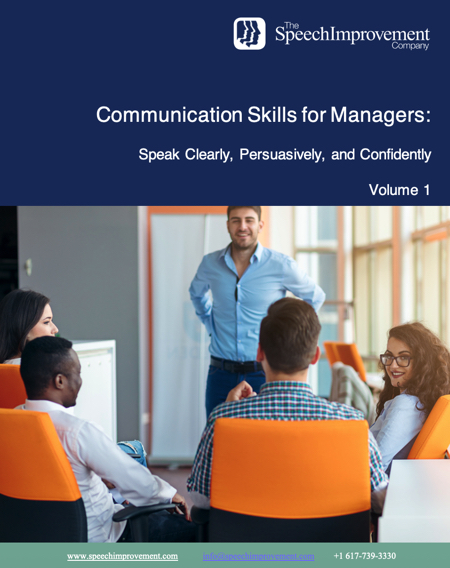
New eBook: Communication Skills for Managers: Speak Clearly, Persuasively, and Confidently Vol. 1
Effective communication isn’t just a leadership skill—it’s a critical success factor. Often, when the stakes are high and the margins for error are slim, important communication skills can’t be left to chance—clarity, precision, and impact are non-negotiable. Yet, many managers did not initially aim to become leaders. Earlier in their careers, as individual contributors, they had excelled. However, the skills that earned them recognition and rewards often don’t translate seamlessly to leadership demands. Now, as